A small range. Done properly
since 1842.
Four pantry essentials, one promise — baking powder, bicarbonate of soda, corn flour and yeast you can stake a bake on.
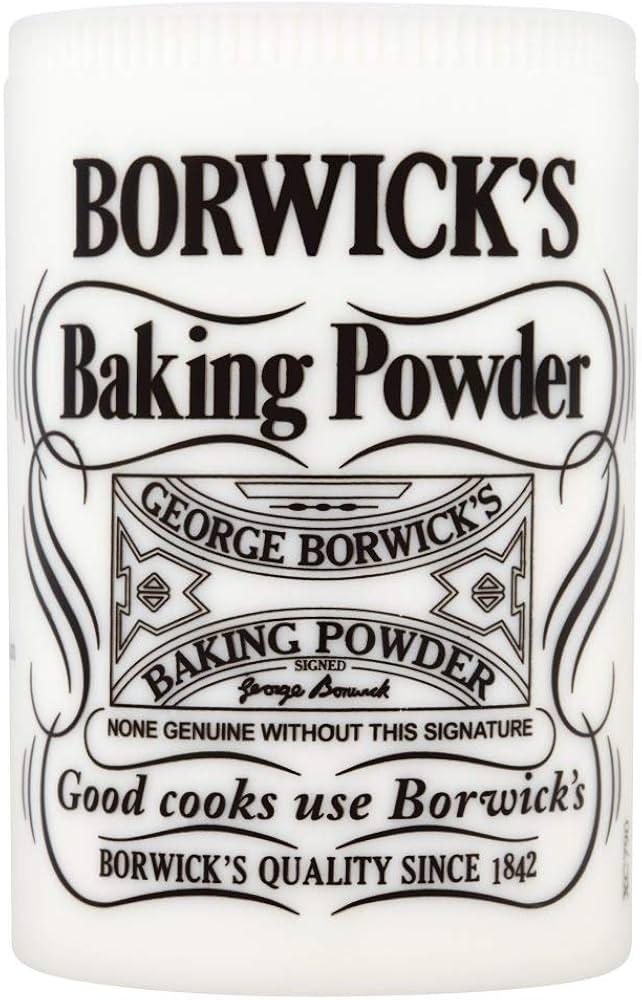
Borwick's Baking Powder
The original — as light as air
A double-acting raising agent for sponges, scones, puddings, pancakes and quick breads. Gluten-free, vegetarian, and dependable to the last spoonful — the same reliable rise that sold six hundred thousand packets a week at its Victorian height.
- Sponges and celebration cakes
- Scones with a proper rise
- Pancakes, puddings and quick breads
- Boosting self-raising flour past its best
- · Gluten-free
- · Suitable for vegetarians
- · No aftertaste
- · Resealable tub
Good cooks keep all four
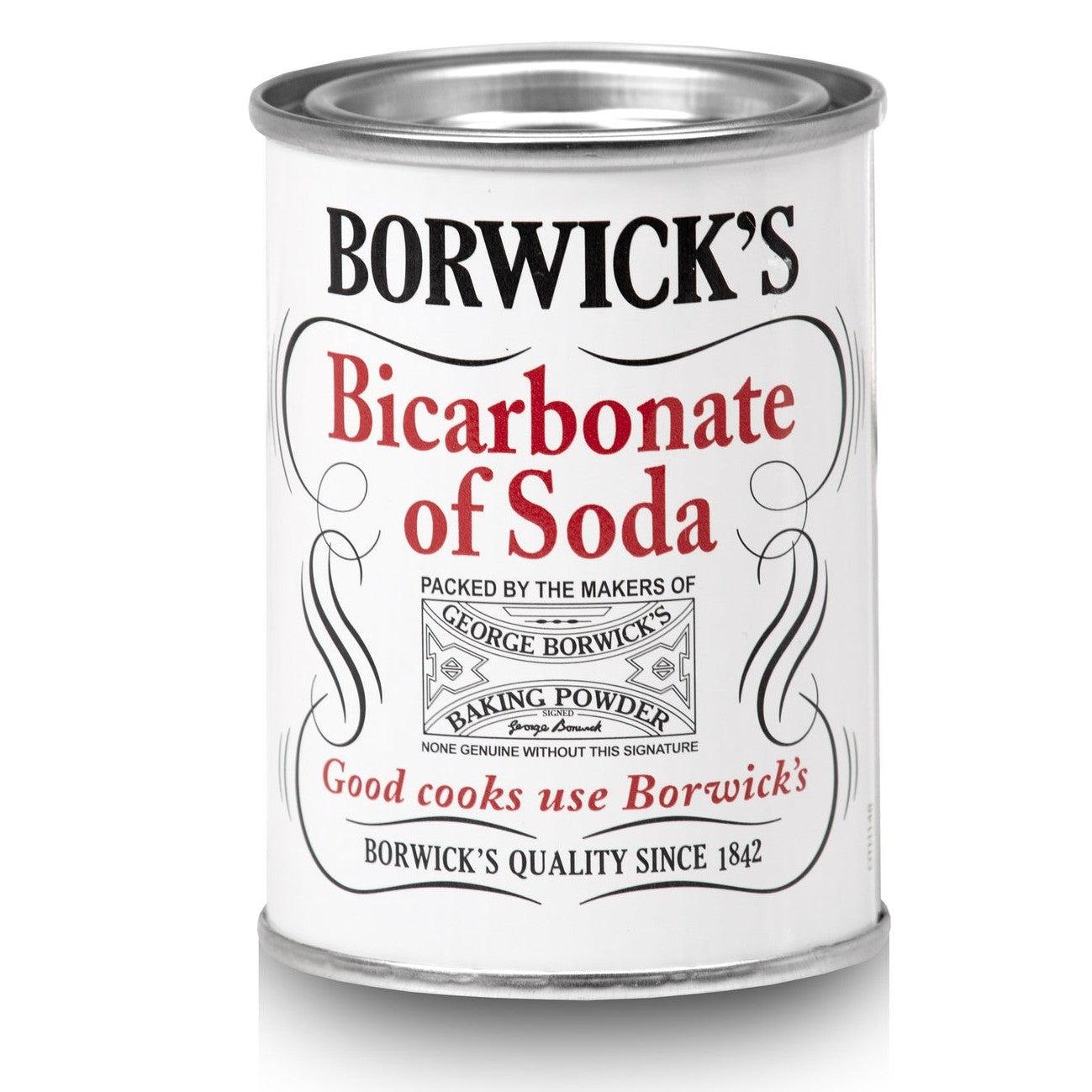
Bicarbonate of Soda
The all-rounder
Pure, fine, food-grade bicarbonate of soda — packed by the makers of George Borwick's Baking Powder. This is the one to reach for when the recipe brings its own acid: buttermilk, treacle, lemon, yogurt or cocoa.
- Soda bread and buttermilk pancakes
- Gingerbread, parkin and treacle bakes
- Chewy cookies with a proper spread
- Honeycomb — the seaside-cinder kind
Bicarbonate needs an acid in the bowl to do its work — baking powder is simply bicarbonate with the acid already measured in. That difference is most of baking chemistry.
- · Gluten-free
- · Suitable for vegetarians
- · Resealable tub
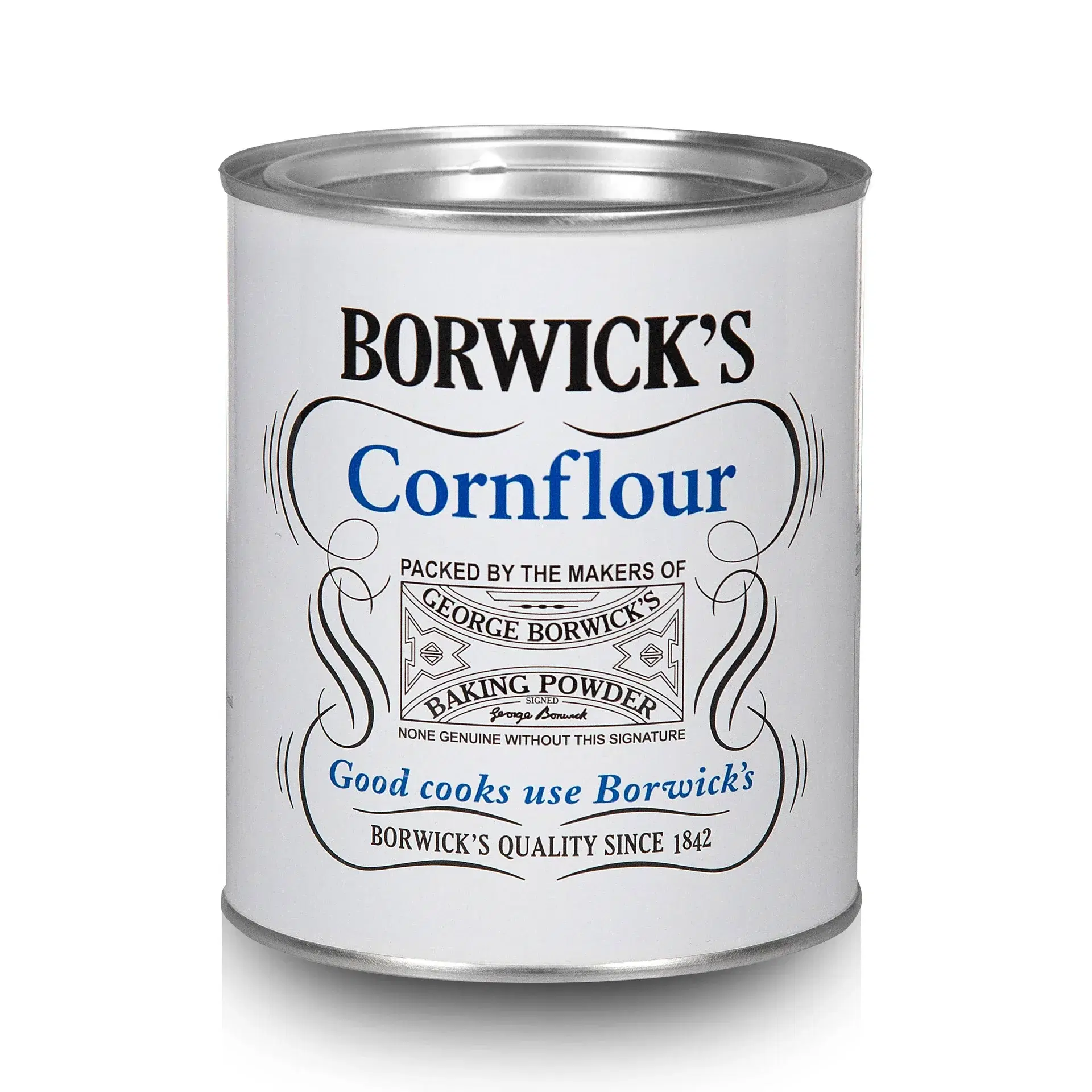
Corn Flour
The silky thickener
Finely milled, naturally gluten-free corn flour for glossy sauces and melt-in-the-mouth bakes. A spoonful stands between you and a lumpy custard.
- Silky gravies, sauces and custards
- Crisp coatings for frying
- Lighter sponges and shortbread
- Thickening pie fillings and stews
Always slake corn flour in a little cold liquid before it meets the hot pan — smooth in, smooth out.
- · Gluten-free
- · Suitable for vegetarians
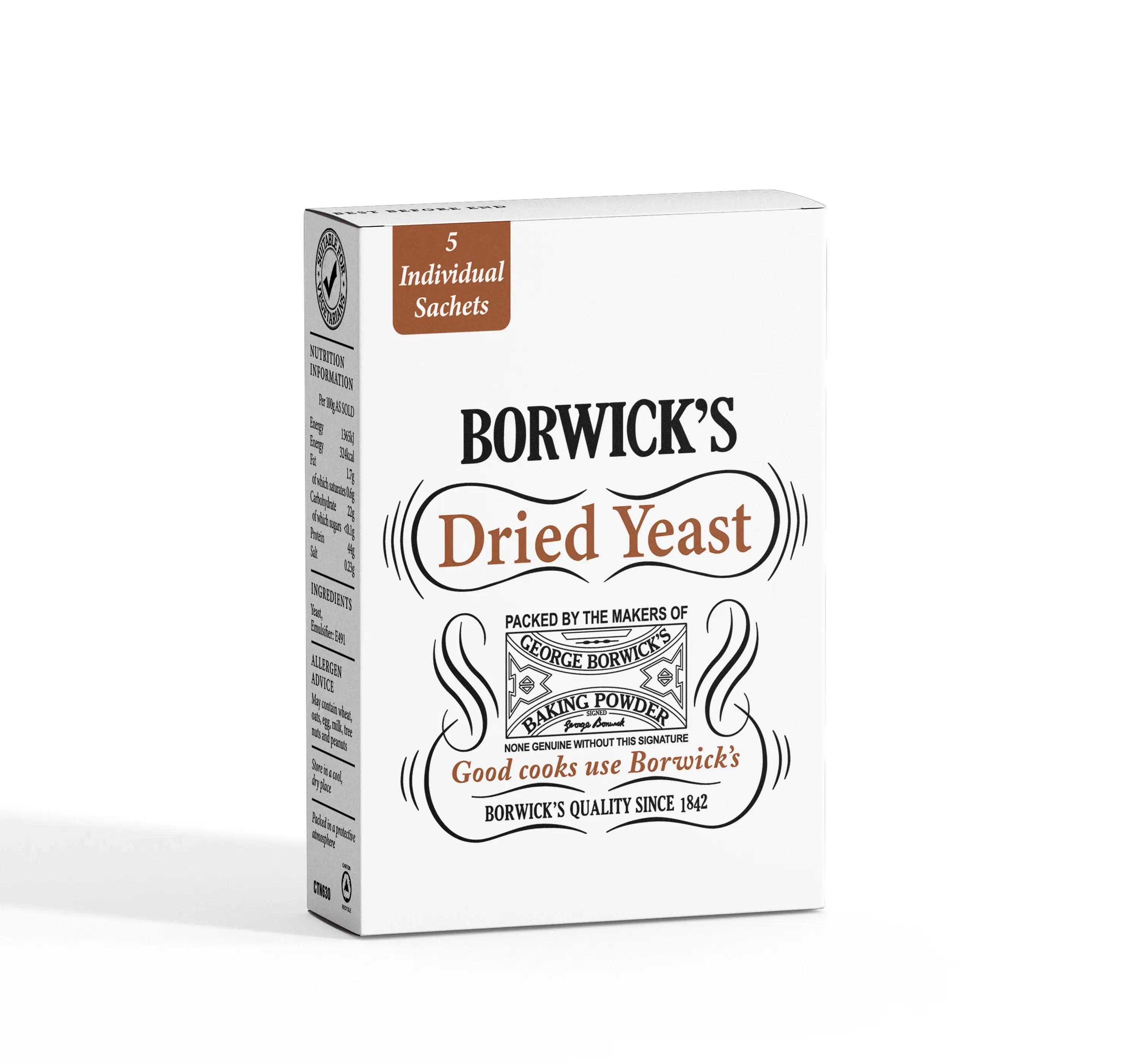
Yeast
For proper bread
Active dried yeast for well-risen loaves with real depth of flavour. We built our name in 1842 giving bakers an alternative to yeast — so when we put our label on the real thing, it has to be worth the wait of a proof.
- Everyday loaves and rolls
- Pizza and flatbread doughs
- Sweet buns, babkas and doughnuts
- Overnight and slow-proved breads
Wake dried yeast in warm (not hot) liquid with a pinch of sugar — if it froths in ten minutes, your loaf is in safe hands.
- · Suitable for vegetarians
- · Resealable
Kitchen questions
Baking powder or bicarbonate of soda?
Bicarbonate needs an acid in the recipe (buttermilk, lemon, treacle, cocoa) to react; baking powder carries its own acid and works in any batter. If the recipe has no acidic ingredient, reach for baking powder.
How much baking powder should I use?
As a rule of thumb: one to two teaspoons of Borwick's per 100g of plain flour, depending on how much lift the bake needs. Sponges sit at the top of that range; biscuits at the bottom.
Can I make my own self-raising flour?
Yes — add two teaspoons of Borwick's Baking Powder to every 150g of plain flour and sift well. That's all self-raising flour is.
How should I store them?
Tightly closed, somewhere cool and dry. Moisture is what spends a raising agent, so keep the lid on and use a dry spoon.
How do I know a raising agent is still active?
Stir a teaspoon of baking powder into warm water, or bicarbonate into vinegar. If it fizzes enthusiastically, it will raise your bake; if it barely murmurs, it's time for a fresh tub.
Every genuine tub carries George Borwick's signature, exactly as the tins have since the nineteenth century.